
Kaleb Erdmann
Die Ausweichschule
[The Emergency School]
- Ullstein Verlag
- Berlin 2025
- ISBN 978-3-988-16022-5
- 304 Pages
- Publisher’s contact details
For this title we provide support for translation into the Polish language (2025 - 2027).
Sample translations
No final triumph for the perpetrator
Steini, says the man opposite, he used to be a mate of mine. Steini? Robert Steinhäuser? Yes. They go outside for a cigarette. The evening ends, after a row on the pavement outside the pub, with the narrator’s nose broken. With a visit to his therapist. And with the decision to write about what he has been through, even though there are no clear, concrete experiences to recount. That is the point. One of them, at least.
The facts: on 26 April 2002, a former pupil of the Gutenberg-Gymnasium in Erfurt, Robert Steinhäuser, carried out a shooting spree at the school, killing 16 people, teachers, pupils, a secretary, a police officer, and then himself. At the time, Kaleb Erdmann, born in Witten in western Germany, was in Year 5 at the Gutenberg-Gymnasium. He had moved to Erfurt with his parents because his mother, a lecturer in Romance studies, had taken up a post at the local university.
Like his narrator, Erdmann did not witness much directly. He is not an eyewitness. Yet that day and what happened have cut more deeply into him than he perhaps wanted to admit, even if his narrator would firmly reject any such psychologising.
Die Ausweichschule is an absorbing, illuminating book which, despite its bleak subject, is at times even funny, because Erdmann repeatedly lets his writer-narrator blunder into absurd situations during his research. Foremost among them is the visit to his former best friend at school in Erfurt, who simply mumbles his way through any attempt to have a conversation guided by sensitivity and empathy about the Gutenberg events, chewing his Nutella roll in his kitchen while the subject is quietly smothered.
Yet the book also carries a deeper seriousness and, above all, a strong sense of the responsibility that comes with writing about a crime so unfathomable, so traumatising for many people to this day. How do you approach the topic without slipping into the now-familiar voyeurism of the true-crime podcast? How do you, as narrator, stay restrained and unsensational, and resist the temptation to turn other people’s experiences into a lesson for your own political agenda? And what right does someone only secondarily affected by the events have to write about all this at all? Is that not a way of appropriating other people’s fates?
All this may sound fashionably hypersensitive, yet it does not read that way in the slightest. One reason is that Die Ausweichschule is full of details that constantly authenticate its mosaic of memories, doubts and research. One example. During the shooting, the narrator’s Year 5 class was sitting a biology test. Topic: penguins. Six days later, the police released a list of those killed by Robert Steinhäuser. Among them was the biology teacher. The first thought of the ten-year-old: who would mark the penguin test now? You couldn’t make that up. It is not cynical, quite the opposite. It shows how mechanisms of protection and repression take shape.
Kaleb Erdmann has worked his way into his subject with painstaking care, a subject that is a long-suppressed part of his own biography. He has gone through the so-called Gasser Report, named after Thuringia’s interior minister Karl Heinz Gasser, only to reach the conclusion: it is the worst text he has ever read. That is how he put it in an interview with Der Spiegel. What Erdmann recognised in it, as if in a distorting mirror, were the thoughts and the language of the perpetrator, the triumph of the school shooter in seeing his act officially confirmed.
That is what Kaleb Erdmann is writing against. And in this undertaking he has produced not mere autofiction, but intelligent, serious literature.
Translated by Alexandra Roesch
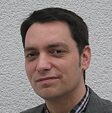
By Christoph Schröder
Christoph Schröder, born in 1973, works as a freelance writer and critic, contributing to Deutschlandfunk, SWR Kultur and Die Zeit, among others.
Publisher's Summary
Getting the measure of unspeakable events
On the final day of the 2002 Abitur exams shots rang out in the Gutenberg Gymnasium, a school in Erfurt. The novel’s author experienced this event as an eleven-year-old; he was evacuated along with his fellow pupils, and in the following weeks he witnessed the helplessness of adults in the face of this appalling episode. More than twenty years later it bursts back into his life completely unexpectedly, and triggers an obsessive preoccupation with the event that he initially supposed would result in a novel. — But why tear open old wounds after so many years? Does he have the right to do so? How reliable are his memories? Are there fictions that he has recounted so often that they have transmogrified into truth?
Kaleb Erdmann’s novel Die Ausweichschule is a clever exercise in perspective; a piece of auto-fiction that is at one and the same time critical of its readers (to what extent is our interest in revisiting acts of violence merely voyeuristic?) and self-critical (what right do I have to write about that day?). This is a trenchant, shocking, very personal book about a deeply troubling worldwide phenomenon.
(Text: Ullstein Verlag)